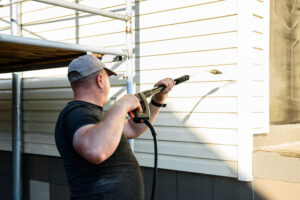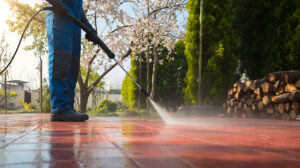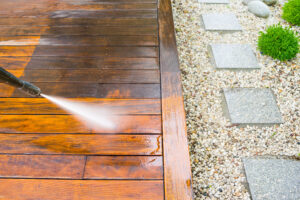
Spring (April to June) and fall (September to October) are hands down the best seasons to power wash a home in New Jersey. The temperatures are between 40 degrees F and 85 degrees F, which gives cleaning agents the right conditions to work well on any surface.
Each season faces its own challenges. I mean, the house does. Humans adapt and change their clothing based on the seasons, but not houses. They stay the same. The day they are built, they will face everything in the same condition every day, every season. It is up to us to take care of them. And it’s not very difficult. I will tell you how.
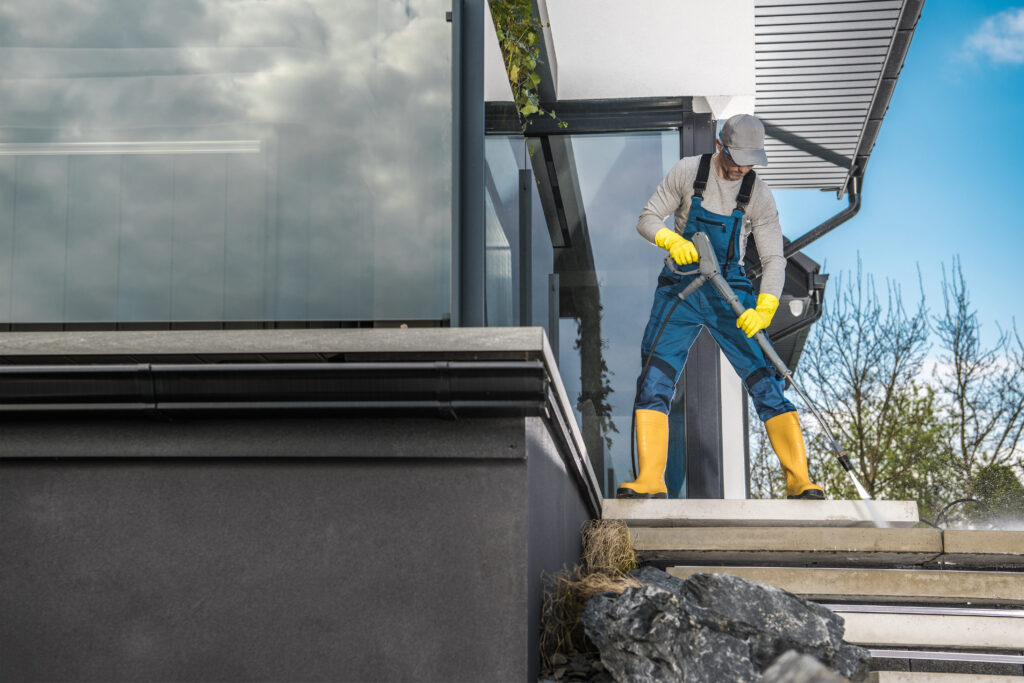
Powerwashing Done Right
What Seasonal Contaminants Accumulate on New Jersey Home Exteriors?
Let’s first learn what we are dealing with. New Jersey has a coastal humid climate, which speeds up algae and mildew growth by 20 to 30 percent compared to inland areas. Different seasons have different stories. You need to look out for these things in every season if you want your house to stay clean and healthy.
The seasonal hardships that home exteriors face are given below.
- Spring: In the spring season, airborne tree and grass pollen, algae spores from snowmelt, and natural dirt from winter precipitation coat siding and roof surfaces.
- Summer: Green algae, black or white mildew, and layers of pollen can be seen on houses in summer. Especially on the shaded or north side of the house, where sunlight rarely reaches.
- Fall: Leaves start to decompose and cause stains. Similarly, organic debris and early algae growth start to make it home on shaded surfaces before winter freeze cycles begin.
- Winter: Houses in winter face road salt (sodium chloride), freeze-thaw moisture, and de-icing residue that gathers on driveways and low-level siding. Untreated road salt corrodes concrete at 0.5 to 2 mm per season.
Spring Power Washing
Spring is the best season for power washing a New Jersey home, as road salt, pollen, and algae spores coat every exterior surface after a long winter. Now, untreated road salt corrodes concrete at 0.5 to 2 mm per season, and pollen traps moisture on siding and wood decks. This is the perfect habitat for the disgusting creature named mold.
April and May are the best options in the summer season when temperatures stay in the 40 to 85 degrees F safe range. Humidity has not peaked yet, and surfaces dry fast after cleaning. If you plan to repaint any exterior surface, spring power washing in NJ improves paint adhesion as well.
Summer Power Washing
Summer power washing works well in New Jersey as long as you time it right. Heat and humidity are the two challenges. Schedule the power washing sessions before 10 AM or after 5 PM to stop detergents from evaporating before they finish the dwell cycle. According to NOAA, New Jersey averages 70 percent humidity in July and August, which speeds algae regrowth on cleaned surfaces within 4 to 6 weeks. It is recommended to only soft wash the siding at 100 to 500 in summer to prevent damage to it.
Fall Power Washing
Fall is the second-best time for power washing in New Jersey, and it does not get the attention it deserves. Summer leaves behind a heavy load of mold, leaf tannins, and organic debris on siding, decks, and driveways. The debris traps moisture and creates ice-adhesion points during freeze-thaw cycles that cause the concrete to crack if you leave it like that. North-facing siding, wood decks, and concrete driveways carry the highest risk.
It is recommended to schedule fall cleaning between September and October, before overnight temperatures drop below 40 degrees F. This way, the cold season doesn’t affect the cleaner, and the water doesn’t freeze.
Friendly Advice: The fall season also tends to have better contractor availability and lower pricing than the busy spring rush.
Winter Power Washing
Winter power washing is not recommended for residential properties in New Jersey. The temperature is below 40 degrees F, and three problems hit at once. The water freezes inside surface cracks and causes spalling, cleaning agents stop working, and wet surfaces freeze fast and become slip hazards. The one exception is commercial properties with active safety needs, which use heated-water systems during mild weather above 40 degrees F. It is advised that homeowners book early spring power washing in New Jersey before April slots fill up.
How Often Does a New Jersey Home Need Power Washing?
Most New Jersey homes need power washing once per year. But some property types need twice-yearly cleaning due to higher environmental exposure. You follow this, and you will be green.
The houses needing more power washing care in New Jersey are as follows.
- Coastal homes within 5 miles of the shore get hit with salt-laden Atlantic air year-round. Salt deposits residue on siding, decks, and concrete faster than in inland properties.
- Homes under heavy tree canopies stay shaded and damp for a longer time. Mold growth on these surfaces is three times more than on open-exposure surfaces.
- Homes with north-facing siding get 40 percent less direct sunlight. Those walls stay damp longer, which speeds up mold and algae growth between cleanings.
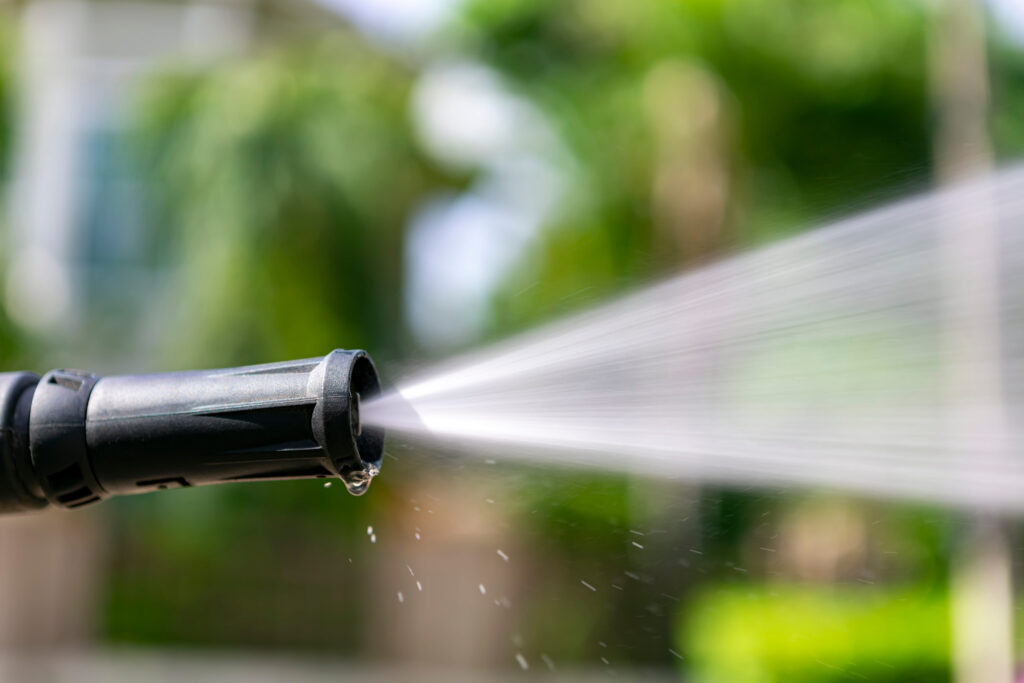
The Right Pressure in the Power Washer is Important
Conclusion
Power washing your home to take care of it and showing it some deserved love does not require complicated planning. It mostly comes down to timing. Spring and fall are the ideal times because temperatures stay in the 40°F to 85°F range, which allows cleaning solutions to work properly and surfaces to dry at a safe pace.
Each season leaves behind its own mess, and regular power washing removes these contaminants before they create long-term damage such as mold growth, concrete corrosion, or siding discoloration.
At the end of the day, your house quietly faces every season without a break. A little maintenance once or twice a year keeps it strong, clean, and protected from New Jersey’s changing weather.
All you have to do is pick up the phone and call a professional like our team. Reach out today and schedule your home’s power washing service in New Jersey before the best seasonal spots fill up.
Contact Us Today!
Frequently Asked Questions
Can Power Washing Damage Vinyl Siding?
Yes, power washing damages vinyl siding when pressure exceeds 1,500 PSI or the spray angle drops below 45 degrees. Water forces behind the panels and into wall cavities, which causes moisture damage, mold growth, and insulation degradation. Soft washing at 500 to 1,000 PSI with a fan-tip nozzle is the correct method for vinyl siding on homes.
Does Power Washing Remove Mold Permanently?
Power washing with algaecide removes visible mold from exterior surfaces. According to the CDC, mold spores stay viable in surface micropores even after high-pressure water removal. Mold spores regrow within 4 to 8 weeks without follow-up surfactant treatment. Algaecide application after power washing increases the mold-free period to 6 to 12 months.
How Long Does It Take to Power Wash a House in NJ?
A standard 1,500 to 2,500 sq ft home takes 2 to 4 hours for a professional crew. Single-story homes with clear exterior access take 2 to 3 hours, while two-story homes or properties with landscaping obstructions require 3 to 4 hours.