You notice it in May, usually. The paver patio out back in Brick looked great when it went in six or seven summers ago. Now there’s grass coming up between half the stones, a little mound of sand by the grill where the ants have moved in, and one paver near the steps that rocks when you step on it. You’ve got a pressure washer in the garage and a bag of sand from the big box store. So, can you handle this yourself, or is it time to call someone?
A light rinse and a quick top-off of sand in a few low joints is usually fine to do yourself. Call a pro when the joints are washed out across the patio, when weeds and ants have taken over, when stones are loose or sinking, or when you want polymeric sand and sealer put down properly. Those jobs mean digging the old sand out of the joints, refilling them right, and timing it around the weather. Get any of that wrong and you’re back where you started, sometimes with a haze on the stones to boot.

Paver Cleaning in Ocean County, NJ
DIY or professional? A quick read
| What you’re seeing | Usually fine to DIY | Time to call a pro |
| Light dirt, pollen | A gentle rinse | – |
| A few joints a little low | Top off with sand | – |
| Weeds and ants in lots of joints | – | Old sand removed, joints refilled |
| Pavers rocking or sinking | – | Reset and re-sanded |
| You want polymeric sand | – | Installed with the right prep and weather |
| Stains, white haze, green growth | – | Cleaned for the specific problem |
Why the sand between pavers matters so much
It’s easy to think of joint sand as filler. It’s actually part of what holds a paver patio together. The sand locks the stones against each other, so when one gets stepped on or driven over, its neighbors help carry the load. Once that sand washes out, stones start shifting, edges chip, and the gaps turn into the perfect spot for weed seeds and ant colonies.
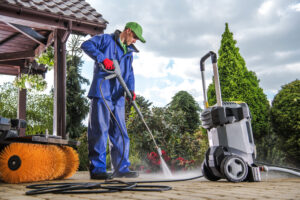
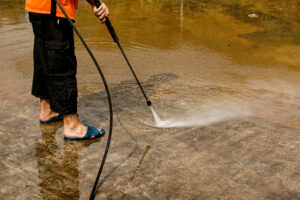
Down the Shore, a lot of things pull sand out of the joints. There’s heavy rain, runoff from the downspouts, and a few too many summers of hosing off the patio. And a pressure washer pointed straight down into a joint will blast the sand right out. Unilock, the paver maker, recommends holding a fan spray at an angle so the joint sand stays put, then refilling the joints once everything’s dry.
When is it fine to do it yourself?
When the problem’s small. If the patio’s just dusty or covered in spring pollen, a gentle rinse is all it needs. If a handful of joints have settled a little, sweeping regular sand into them and tamping it in is a reasonable Saturday job.
Where people get into trouble is going bigger without the prep. Sweeping new sand over old, dirty, weed-filled joints doesn’t really fix anything. The new sand sits on top, the weeds keep growing underneath, and it all washes out again by fall.
Re-sanding with polymeric sand is a different job
Polymeric sand is joint sand mixed with a binder, so it hardens once it’s wet and set. It does a much better job holding up against weeds, ants and washout than plain sand. It’s also a lot less forgiving.
Alliance Gator, one of the big makers, lays out a few rules that show why. Don’t just add a thin layer of new sand over the old stuff. They say to clear out at least an inch of the existing joint material first, often with a pressure washer, and then refill. The finished sand should sit at least 1/8 inch below the chamfer, the little beveled edge on top of the paver. And watch the weather, because rain within 24 hours of installing can keep the joints from hardening properly.
So picture doing that across a 400-square-foot patio. You’d be cleaning every joint an inch deep, letting everything dry out, sweeping and compacting the new sand, getting the haze off the stone faces, and then hoping the forecast holds. That’s usually the point where hiring someone starts to make sense.
What about stains, haze and green growth?
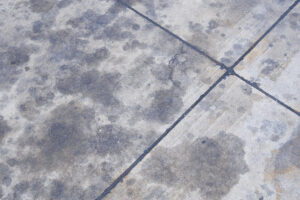
Those all need their own approach. A white, chalky film on newer pavers is often efflorescence, which is salts working up out of the concrete. It’s a different problem from dirt, and our post What Is Efflorescence on Brick and Pavers, and Can Pressure Washing Remove It? explains how it’s handled. Green and black growth in shady spots is its own fight, covered in How to Get Rid of Stubborn Patio Stains Including Algae, Lichen and Black Spot.
Pressure matters too. Pavers can take more than a roof or siding can, but they still need the right tip, angle and distance. Soft Washing vs Pressure Washing: Which Exterior Surfaces Need Each Method runs through which surfaces get which.
What a professional paver job looks like
Our Pavers & Sanding service starts with a deep clean of the stones. Then we strip the old sand out of the joints, refill them with polymeric sand and seal the surface to protect it. If the patio connects to a walkway or driveway, it often makes sense to do those at the same time, and our Patios & Driveways page covers that side.
Frequently asked questions
How do I know if my pavers need re-sanding?
Look for joints that have sunk below the paver edges, weeds or ants in the gaps, or stones that shift when you step on them.
Can I put new polymeric sand over old sand?
Alliance Gator says not to. It recommends removing at least an inch of the old joint material first, then refilling.
Does rain ruin new polymeric sand?
It can. Rain within 24 hours of installation can keep the joints from hardening properly, so check the forecast first.
Can I pressure wash my pavers myself?
Yes, but carefully. Keep a fan spray angled away from the joints so the sand stays in place, and refill any joints that wash out once they’re dry.
Seeing weeds, ants or loose stones in your pavers? Coastal Restorations has been cleaning and restoring outdoor surfaces across Ocean and Monmouth County since 1993, from our shop on Mantoloking Road in Brick. Estimates are free. Call 732-836-0026, read what customers say on our Testimonials page, or contact us.