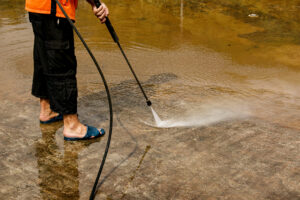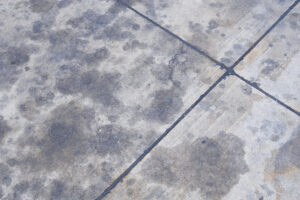
Ask most homeowners and they’ll tell you washing the outside of a house is one job, you grab a pressure washer and go at it until things look clean. Trouble is, the pressure that makes an old concrete driveway look brand new will happily rip the granules off your shingles, shove water up behind the vinyl, and leave a soft pine deck looking like somebody took a fork to it.
So asking which method is better kind of misses it. What matters is what you’re pointing the thing at. Roofs and siding usually want a soft wash, which is low pressure with a cleaning solution doing the work, while driveways, sidewalks and most concrete can handle the real pressure. A lot of what’s in between depends on the material and, sometimes, the brand.
We’ve been at this around Ocean and Monmouth County since 1993. Below is how we’d call it, going surface by surface.
Quick guide by surface
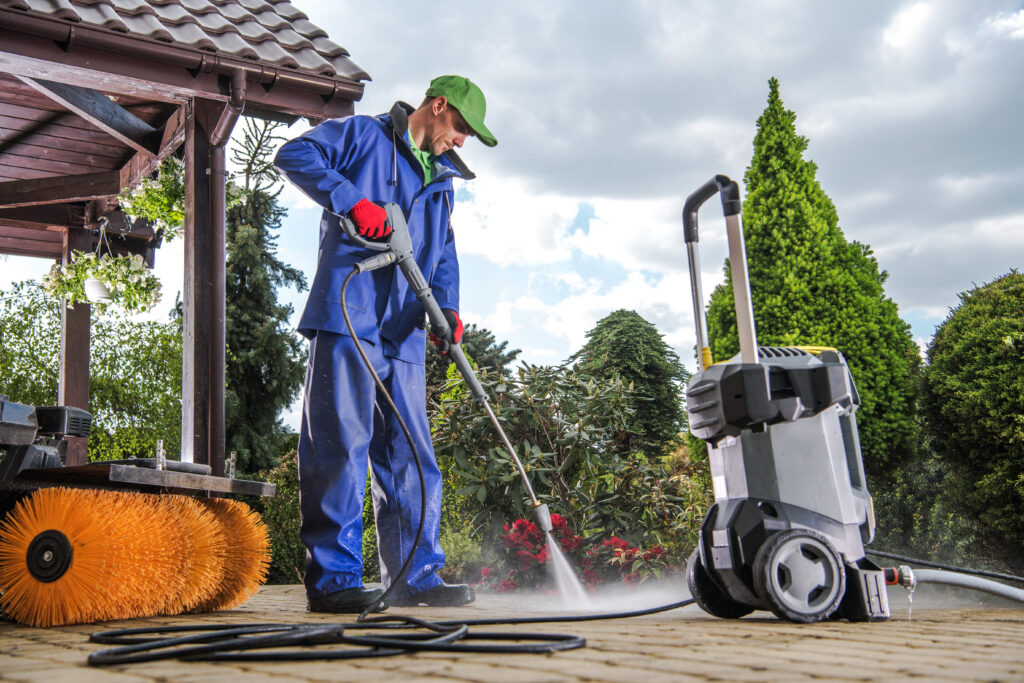
Soft Washing vs Pressure Washing in NJ
| Surface | Usual method | Why |
| Asphalt shingle roof | Soft wash | High pressure damages shingles |
| Vinyl and aluminum siding | Soft wash | Pressure can push water behind it |
| Stucco | Soft wash, carefully | Coating can be damaged at low pressure |
| Composite decking | Depends on the brand | Some allow pressure, some don’t |
| Wood decks and siding | Gentle pressure | Too much tears up soft wood |
| Concrete driveways, sidewalks | Pressure wash | Hard surface, tough stains |
| Pavers | Pressure wash, angled fan | Protect the joint sand |
What’s the difference between soft washing and pressure washing?
Think of it this way. With a soft wash, the solution is doing the heavy lifting, it soaks in and kills the mold, mildew and algae, and the water’s really just there to carry it on and rinse it off at low pressure. A pressure wash is the opposite, it’s the force of the water that knocks grime and stains loose, which is great on concrete and pavers and not so great on anything softer. We run 3,500 PSI hot-water machines with an eco-friendly cleaner that has a mildew inhibitor in it. That doesn’t mean every surface gets the full 3,500, though. Anything softer gets dialed way down.
If you want the bigger-picture comparison first, we covered it in Soft Washing vs Power Washing: Best Method for Your NJ Property. This post is about the surfaces themselves.
Why should a shingle roof never be pressure washed?
Short version, it wrecks the shingles. And that’s not us talking, it’s the Asphalt Roofing Manufacturers Association, which flat out says high-pressure washing is likely to damage asphalt roofing. They don’t love brushes or brooms up there either, since scrubbing knocks off the little granules that protect the shingle.
Those black streaks you see running down roofs at the shore? According to the same group, they’re usually airborne algae, most often a species called Gloeocapsa magma. The association’s recommended approach is gentle: a bleach-and-water solution applied carefully, left on for 15 to 20 minutes, then rinsed off with low-pressure water. It also says to keep the solution off surrounding landscaping, and that the results can be temporary since the algae can come back.
Roofs get slippery once they’re wet and treated, too, which is one more reason this isn’t a ladder-and-garden-hose Saturday project. More on our roof work is on the Roofs & Gutters page.
Can you pressure wash vinyl siding or stucco?
You can get water on them, sure. Just not driveway-style. Vinyl panels overlap like shingles, so if you spray up at them, the water goes right up underneath, and a nozzle that’s too tight or too close can leave the siding discolored, sometimes worse. We go low pressure with the right solution and rinse from the top down, which gets the green stuff off and leaves the panels alone.
Stucco is touchier than people expect. Sto Corp, which makes stucco and coating systems, notes in its care guidance that damage can happen at relatively low water pressure on some substrates, and that the pressure, the tip and the distance from the wall all have to be set to protect the surface. The same guidance says to skip aggressive scrubbing and stiff brushes, and to rinse the wall really well after any cleaner goes on.
Aluminum siding falls in the soft-wash group too. Our Home Exteriors page has more on how we approach a full house wash.
What about decks, wood or composite?
Depends on what’s under your feet. Wood can take some pressure, but go easy, because softer boards fuzz up and gouge if you lean on them too hard. Honestly, the cleaner and the way you move the wand matter more than how much pressure you’ve got. After cleaning, wood usually needs a sealer or stain to hold up through Jersey winters and humid summers, which we cover in Deck Staining After Power Washing: Protecting Your NJ Wood Deck.
Composite is a brand-by-brand thing. Trex, for example, says its newer high-performance lines can take a pressure washer at no more than 3,100 psi, using a fan tip held at least 8 inches from the boards, and that going higher could damage the boards and void the warranty. For its early-generation decking, though, Trex doesn’t recommend a pressure washer at all, and says pressure washing voids the warranty for any damage it causes. So before anyone touches a composite deck with a wand, it’s worth knowing exactly what’s on it.
Which surfaces actually need pressure washing?
Concrete, mostly. Driveways, sidewalks, garage floors, pool decks and parking areas are hard enough to take real pressure, and stains like oil, grime and ground-in dirt usually need it. If you’re seeing white, powdery residue on brick or pavers, that may be efflorescence rather than dirt, which we explain in What Is Efflorescence on Brick and Pavers, and Can Pressure Washing Remove It?
Pavers are a pressure-wash surface with one big catch, the sand between them. Unilock, a paver manufacturer, recommends a fan spray angled so you don’t blow the sand out of the joints, and says that if joint sand does come out, the joints need to be refilled once the surface dries. That’s exactly why our Pavers & Sanding service pairs the deep clean with stripping out old joint sand, laying fresh polymeric sand, and sealing.
Frequently asked questions
Is soft washing as effective as pressure washing?
For roofs and siding, it’s actually the better option, since what you’re fighting there is mostly mold and algae and the solution handles that. Oil on a driveway is a different fight, and that’s where pressure earns its keep.
Can pressure washing void a warranty?
It can. Trex says pressure washing voids the warranty on its early-generation decking, and going over 3,100 psi on newer lines can too.
How often should a house be washed?
We recommend at least every two years, sooner if you see mold, algae or mildew building up.
Do I need to be home during the cleaning?
No, but let us know if you won’t be there.
Not sure what your house needs? Coastal Restorations is licensed, bonded and insured, and estimates are free. Call us at 732-836-0026, and if you can, book about a month ahead. You can also read How Often Should A House Be Power Washed & Why?, check out Decks & Siding, or contact us online.